nuffnang

Wednesday, September 15, 2010

2010 Pagani Zonda Tricolore

In honor of the National Aerobatic Team, Frecce Tricolori, who is celebrating their 50th anniversary, Horacio Pagani unveiled his latest masterpiece, the 2010 Pagani Zonda Tricolore, as a tribute to this nine-plus-one demonstration team of the Italian Air Force. The team is based at Rivolto Air Force Base in the province of Udine. They will be celebrating their 50th anniversary in September 11 and 12 of 2010.

This exquisite piece of work is powered by a Mercedes Benz AMG 7.3-liter V-12 engine that delivers 670 horsepower and has a torque of 780 Nm. Pagani spared no expense in building the car. The body is mostly built of titanium, carbon fiber and magnesium, and is painted navy blue with red, green and white stripes running down the hood. It also boasts of a six-speed sequential gearbox by Cima which is robotized by Automac engineering, and carbo-ceramic self-ventilated brakes by Brembo. The 2010 Pagani Zonda Tricolore’s wheels and interior are both an impressive sight, with the former painted bright gold and the latter a cool green.


With the tremendous amount of power packed in this beautiful car, Horacio Pagani says that his masterpiece can move from 0 to 100 km in about 3.4 seconds and 0 to 200 km in approximately 9.6.


Fastest Cars In The World: Top 10 List 2009-2010

1. Bugatti Veyron: 267 mph, 0-60 in 2.5 secs. Aluminum, Narrow Angle W16 Engine with 1001 hp, base price is $1,700,000. Tested again on July 10, 2010, the Bugatti Veyron once again claimed its title as the fastest car in the world at 267 mph.
2. SSC Ultimate Aero: 257 mph, 0-60 in 2.7 secs. Twin-Turbo V8 Engine with 1183 hp, base price is $654,400. Tested in March 2007 by Guinness World Records, The SSC Ultimate Aero was the fastest car in the world from March 2007 to July 2010 until recently it fell behind the Bugatti Veyron to take the #2 spot 


3. Saleen S7 Twin-Turbo: 248 mph, 0-60 in 3.2 secs. Twin Turbo All Aluminum V8 Engine with 750 hp, base price is $555,000. Smooth and bad-ass, will make you want to show it off non-stop.  


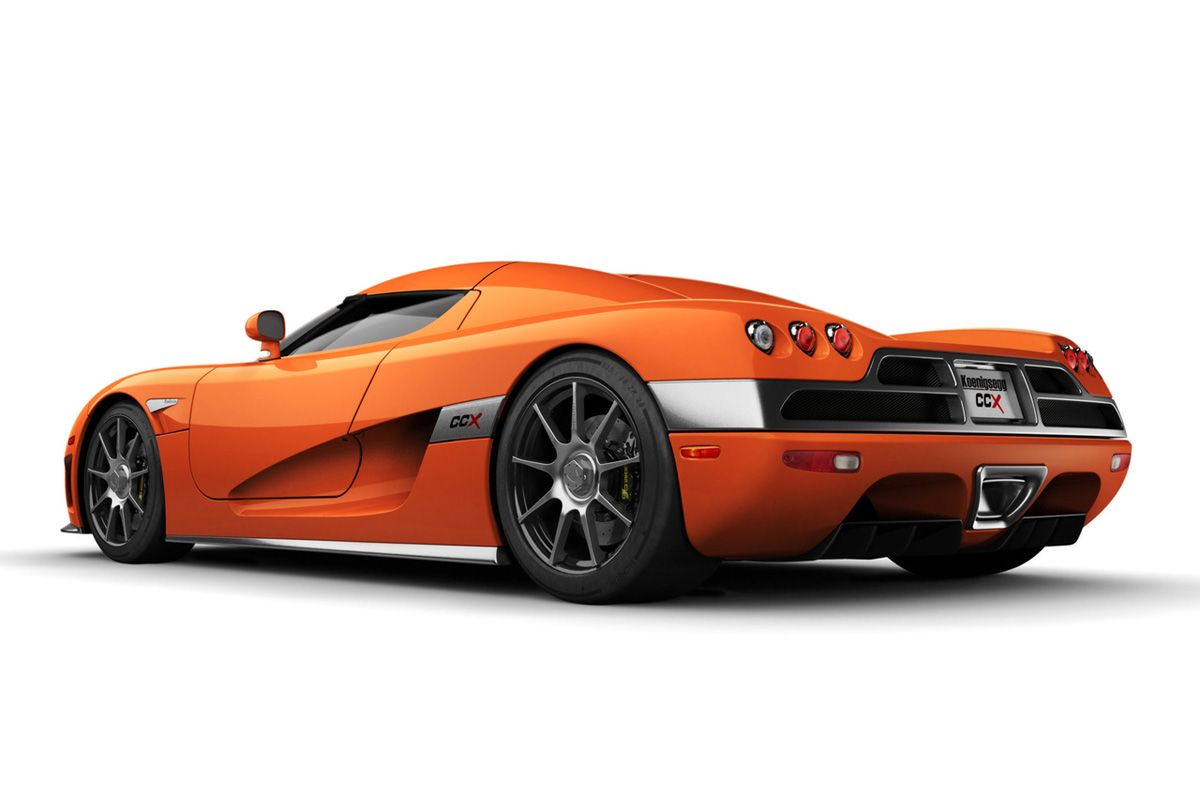
4. Koenigsegg CCX: 245 mph, 0-60 in 3.2 secs. 90 Degree V8 Engine 806 hp, base price is $545,568. Made in Sweden, it is aiming hard to be the fastest car in the world, but it has a long way to go to surpass the Bugatti and the Ultimate Aero.


5.McLaren F1: 240 mph, 0-60 in 3.2 secs. BMW S70/2 60 Degree V12 Engine with 627 hp, base price is $970,000. Check out the doors, they looks like bat wings, maybe Batman need to order one and paints it black


6. Ferrari Enzo: 217 mph, 0-60 in 3.4 secs. F140 Aluminum V12 Engine with 660 hp, base price is $670,000. Only 399 ever produced, the price goes up every time someone crashes.


7. Jaguar XJ220: 217 mph, 0-60 in 3.8 secs. Twin Turbo V6 Engine with 542 hp, base price was $650,000. Made in 1992, this car still got what it takes to make the list.


8. Pagani Zonda F: 215 mph, 0-60 in 3.5 secs. Mercedes Benz M180 V12 Engine with 650 hp, base price is $667,321. With a V12 motor, this baby can do much better


9. Lamborghini Murcielago LP640: 211 mph, 0-60 in 3.3 secs. V12 Engine with 640 hp, base price is $430,000. Nice piece of art, the design is very round and smooth.


10. Porsche Carrera GT: 205 mph, 0-60 in 3.9 secs. Aluminum, 68 Degree, Water Cooled V10 Engine with 612 hp, base price is $440,000. The most powerful and most expensive Porsche  nearly made the list as #10.


Monday, September 13, 2010

In the Studio with... Yngwie Malmsteen

Gibson Les Paul Custom

GIBSON LES PAUL CUSTOM (WHITE)


The Gibson Les Paul was introduced in 1952, and was made of a mahogany body with a 1" maple cap, mahogany neck with rosewood fret board and twoP-90 pickups. The guitar was only available in a golden finish. In 1954 a more luxurious version was introduced, most probably on specific request by Les Paul himself, as he wanted a more luxurious and classy looking guitar. He requested a black guitar as he wanted it to "look like a tuxedo". Nicknamed the Black Beauty, the guitar had a mahogany body and neck, ebony fret board and mother of pearl block markers inlays in the fret board. The pickups were a P90 in the bridge position and a newly designed by Seth Lover Alnico V pickup in the neck position.[1] The frets are low and flat, as opposed to the usual medium jumbo frets found on other Les Paul customs, and the guitar soon was given the nickname "The Fretless Wonder". The hardware is either gold or nickel silver plated.
By 1957 The Black Beauty also came equipped with either 2 or 3 PAF humbuckers, but strictly speaking this model is not a 'fretless wonder', as the frets were standard medium jumbo frets.
Today, the Les Paul Custom is made with a maple-capped mahogany body rather than the solid mahogany body of the 1954 model. It is available in silverburst, ebony, alpine white, wine red and cherry sunburst. The Custom model differs from the Les Paul Standard in many ways. The cosmetic differences include gold hardware (though silverburst Customs have chrome hardware); block inlays on the fretboard rather than the "crown" inlays of the Standard (with an inlay at the 1st fret, whereas the Standard has none); a "split-diamond" pearl inlay on the headstock; and multi-ply binding around the body, neck and headstock. The construction differences are an ebony fretboard which tends to sound "snappier" and make the fretboard more "slippery," lower frets with more squared off tops that give the instrument the nickname the "fretless wonder" and larger round "speed" style knobs (though other knob types can be seen depending on the year).
The "Split Diamond" Inlay on the headstock was taken from Gibson's 'greatest guitar', the Super 400 CES, a carved archtop, hollow body electric guitar.

FENDER STRATOCASTER (YNGWIE MALMSTEEN SPECIAL EDITION)


== Specifications ==
* Body: Alder
* Neck: Maple, Modern "C" Shape
* Fingerboard: Scalloped Rosewood or Scalloped Maple; 9.5" radius (241 mm)
* Frets: 21 Dunlop 6000 Super-Jumbo Frets
* Pickups: 2 DiMarzio YJM Pickups (Neck & Middle), 1 DiMarzio HS-3 Stack Humbucker (Bridge)
* Controls: Master volume, Tone. 1 No-load tone control (neck pickup), Tone. 2 No-load tone control (middle & bridge pickups)
* Pickup Switching: 3-Way Pickup Blade Switch
* Bridge: American Vintage Synchronized Tremolo
* Tuning Pegs: Fender Schaller Vintage "F" Style Tuning Machines
* Hardware: Chrome
* Pickguard: 3-ply White/Black/White
* Unique Features: Special Refined '60s Shape Neck with Large Late '60s Styled Headstock, Machine Screw Neck Mounting Inserts, Bullet Truss Rod Nut, Brass Nut, Deeper Scalloped Fingerboard, Dunlop 6000 Jumbo Fretwire, Aged Plastic Parts, Aged Pickup Covers

GIBSON LES PAUL


The iconic Gibson Les Paul, took the music world by storm when it debuted in 1952. More than five decades later, this all-time favorite solid body electric guitar continues to influence guitarists, musicians and music lovers all over the world.
Any player who knows their guitar history is already aware that the Les Paul was pioneered, developed with the assistance of, and endorsed by the famous jazz-pop artist of the same name. Paul wanted a guitar that better served the needs of jazz guitarists, one that would offer more sustain and feedback resistance than the hollowbody archtops that were the norm at the time, and would also be more versatile sonically. Of course these qualities also suited electric players in just about every other genre, and Les Paul Goldtops in their earlier incarnations with P-90 pickups quickly wound up in the hands of a diverse range of artists, from formative blues men John Lee Hooker and Freddie King to rock'n'roller Carl Perkins. Following Paul's lead, plenty of jazz players took them up too. Adept at producing thick, warm tones from its neck pickup in particular despite being a solidbodied design, the Les Paul proved a natural choice for plenty of great jazzers. More surprising, perhaps, is the ease with which it adapted to country styles.
Back in the fifties and in the early days of the solid body electric guitar, guitar models were simple in design, barely more than a flat price of wood with minimal accouterments. With the Les Paul Standard, Gibson moved up the aesthetic value of the guitar by designing a stylish and sleek work of art. The move might have seemed strange to followers of Gibson, generally regarded as traditionalists in the field, but on hindsight it was actually an extension of Orville Gibson's radical mandolin designs back in the 19th century. The new member of the Gibson stable was set to have the same caved top form that had so distinguished Orville's earlier designs form the rest of the pack.
The Gibson Les Paul Standard has a solid mahogany body embellished by a carved maple wood top. All Gibson Les Paul guitars have humbucker pick ups that vary depending on the model. The Gibson Les Paul has changed little since its introduction. There have been a few humbucking pickups and updated bridge, but besides these minor changes, this is still the guitar that defined an entire generation of music, from the blues rock of the 60s to the southern rock of the next decade.
By the time the nineties rolled around, the Les Paul signature sound was found in virtually every musical genre there was, from rock and alternative to metal.